How to Choose the Right Spectrophotometer in 2026

Spectrophotometers—these seemingly niche instruments are making their way out of the lab at an unprecedented pace. This article helps you choose the most suitable spectrophotometer by examining factors such as identifying your needs, optical path design, light sources and detectors, and resolution. Considerations Before Purchasing a Spectrophotometer Before reviewing any product specifications, please answer the following three questions. [...]
2026-06-22T16:41:30+08:00June 22nd|Blog|

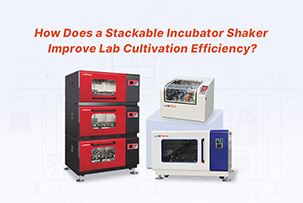
How Does a Stackable Incubator Shaker Improve Lab Cultivation Efficiency

In modern research fields such as life sciences, biomedicine, food science, and environmental protection, experiments involving microbial culture, cell fermentation, enzymatic reactions, and genetic engineering all impose extremely stringent requirements on temperature, shaking frequency, and environmental stability. While traditional single-tier incubators are reliable, their throughput per unit of floor space has gradually become insufficient to meet the demands [...]

2026-06-22T16:39:49+08:00June 22nd|Blog|

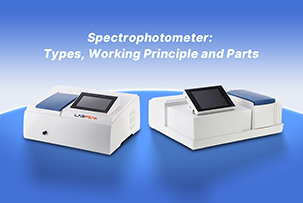
What is a Spectrophotometer? How does it Work?

A spectrophotometer is a core spectroscopic instrument that enables the qualitative and quantitative analysis of substances based on the principle of selective light absorption. Its theoretical foundation is the Lambert-Beer law. By measuring the absorbance of a sample at a specific wavelength, the composition and concentration of the substance can be accurately determined. As essential equipment in modern [...]

2026-05-22T09:53:12+08:00May 22nd|Blog|

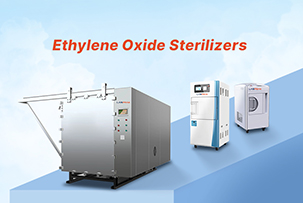
Inside the Ethylene Oxide Sterilizers Used in Hospitals

When you visit the hospital, you might worry: Are the instruments the doctors use clean? Is there a risk of cross-contamination? In fact, hospitals have a strict disinfection and sterilization system in place. Among these, there is one unassuming yet crucial piece of equipment that quietly safeguards the safety of every patient—the ethylene oxide sterilizer. Statistics show that [...]

2026-05-22T09:27:43+08:00May 22nd|Blog|

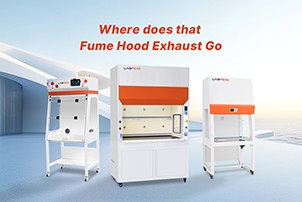
Where does that Fume Hood Exhaust Go

Fume hoods are essential safety devices in laboratories handling chemicals, solvents, and airborne hazards. While most users understand that a fume hood protects them by capturing harmful vapors, a common question remains: where does that exhaust actually go? The answer is not as simple as “outside.” Modern laboratory ventilation systems are designed with controlled airflow, treatment technologies, and [...]

2026-04-30T14:01:05+08:00April 30th|Blog|

Laboratory Water Purification Systems: Differences, Types

Common contaminants in tap water include enzymes, gases, organic matter, microorganisms (bacteria, viruses), and others. Laboratory water purification aims to filter out various contaminants from water to meet the requirements of chemical analysis and biological experiments. Understanding the types, performance characteristics, and applicable uses of different water purification systems helps laboratories select appropriate equipment based on actual needs. [...]

2026-03-16T10:58:31+08:00March 16th|Blog|

Refrigerator that Complies with Medical & Laboratory Standards

Laboratories contain numerous temperature-sensitive samples, such as blood bags and vaccines. To ensure the viability and safety of these samples remain unaffected, they must be stored within specified temperature-controlled ranges. Any temperature fluctuations, cold chain interruptions, or unstable storage conditions may cause protein denaturation or sample degradation. This directly impacts the accuracy of test results and the reliability [...]

2026-02-25T15:54:50+08:00February 25th|Blog|

PCR Workstation: Guide to PCR Cabinets

A PCR cabinet is a specialized workstation designed to create a controlled environment for Polymerase Chain Reaction (PCR) procedures. It helps minimize contamination risks by providing a sterile area, ensuring the accuracy and reliability of PCR results. Typically equipped with UV light and HEPA filters, PCR cabinets are essential for DNA amplification processes in molecular biology labs. Continue [...]

2026-02-12T09:54:50+08:00February 12th|Blog|

How Does a Laminar Flow Cabinet Work

What is a laminar flow cabinet? Clean benches and biosafety cabinets are commonly used as examples of laminar flow hoods. These devices are designed to direct high-quality air to the work surface. A laminar flow cabinet is a closed-system device equipped with a HEPA filtration system, designed to provide a clean and sterile operating environment during experiments. It [...]

2026-02-12T09:54:43+08:00February 12th|Blog|

Difference Between Laminar Flow and Biosafety Cabinet

Ensuring safety in the laboratory is of utmost importance, and biosafety cabinets and laminar flow hoods are critical pieces of equipment for achieving this goal. Although the two appear similar in appearance, they differ significantly in terms of function, application, and design principles. This article will provide a comprehensive comparison of biosafety cabinets and laminar flow hoods, detailing [...]

2026-02-12T09:54:28+08:00February 12th|Blog|

Title

CONTACT INFO

Liancheng Manufacturing Town, No. 19 Huanghe Street, Jinan City, Shandong Province, China

Go to Top